Creating Sustainable Routines
Most routines don't last beyond three weeks. Why? They're often built on willpower rather than thoughtful design. Willpower is a limited resource that can deplete throughout the day. Sustainable routines, by contrast, use environmental cues, habit stacking, and natural energy patterns to make desired behaviors easier to maintain.
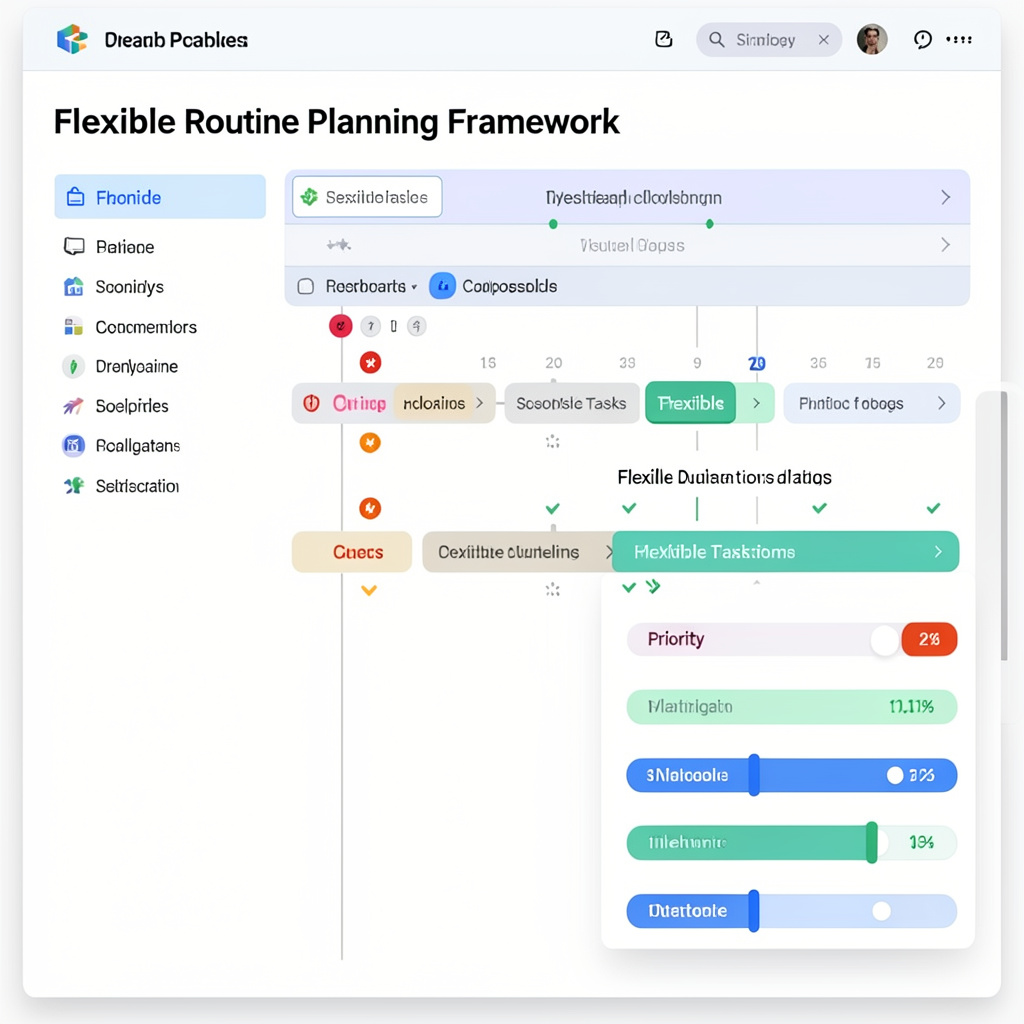
Effective routines aren't rigid schedules—they're flexible frameworks with built-in decision points. Instead of "I must exercise at 6 AM," consider "I exercise during my morning energy window, which falls between 6-8 AM depending on when I wake." This flexibility helps avoid the all-or-nothing thinking that can derail rigid plans.
The most successful routines balance predictability with adaptability. Core elements remain consistent, providing stability and reducing decision fatigue. Variable elements adjust based on circumstances, helping avoid the frustration that can come from trying to force the same schedule onto different days.
Foundation Strategies
Building balanced routines starts with several core strategies that create stability while preserving adaptability. These approaches help you design routines that feel supportive rather than restrictive.
Layered Approach
Start with one anchor habit. Once it becomes more automatic (typically 3-4 weeks), add another. This approach helps avoid the overwhelm that can stop ambitious routine overhauls. Each layer can reinforce the previous one.
Rotation System
Not everything needs daily attention. Rotate focus areas throughout the week—deep work Mondays and Thursdays, administrative tasks Tuesdays, creative projects Wednesdays. This approach can help prevent burnout while ensuring nothing gets neglected.
Flexible Boundaries
Instead of "workout at 7 AM," use "workout between 6:30-8 AM." Time ranges accommodate natural variations in wake time, sleep quality, and morning obligations without requiring you to abandon the routine entirely.
Energy Matching
Schedule your most cognitively demanding work during times when you feel most alert. Save routine tasks for periods when energy naturally dips. Working with your natural energy patterns can help you use effort more effectively.
Implementation Methods
Knowing strategies is one thing; implementing them effectively is another. These methods help you translate concepts into practical daily actions that create lasting change.
Begin with observation. Spend a week noting when you feel energized, when you struggle, and when you accomplish tasks most easily. This data informs your routine design and ensures it aligns with your natural patterns rather than working against them.
Next, identify your non-negotiables—activities that must happen regardless of circumstances. Build your routine around these anchors, then add flexible elements that enhance your day without creating pressure. This layered approach allows you to maintain essential activities while exploring additional practices.
Finally, implement changes gradually. Introduce one new element at a time, allowing it to become more habitual before adding another. This approach helps avoid overwhelm and gives you clearer feedback about what works and what doesn't.
Adapting to Change
Life circumstances shift, and your routine should shift with them. Seasonal changes, new responsibilities, or evolving priorities all warrant routine adjustments. Regular review helps you stay aligned with your current needs rather than maintaining outdated patterns that no longer serve you.
When making changes, adjust one element at a time. This allows you to assess the impact of each modification and helps avoid the confusion that can come from changing too much simultaneously. Give each adjustment at least two weeks before evaluating its effectiveness.
Remember that adaptation is a sign of a healthy routine, not a failure. The ability to modify your approach as circumstances change demonstrates wisdom and self-awareness. Embrace this flexibility as a core feature of sustainable routine building.
Disclaimer: All presented materials and practices are for educational and informational purposes only and are intended to support general well-being. They do not constitute medical diagnosis, advice, or recommendations. Before applying any practice, especially if you have chronic conditions, consult a healthcare professional.